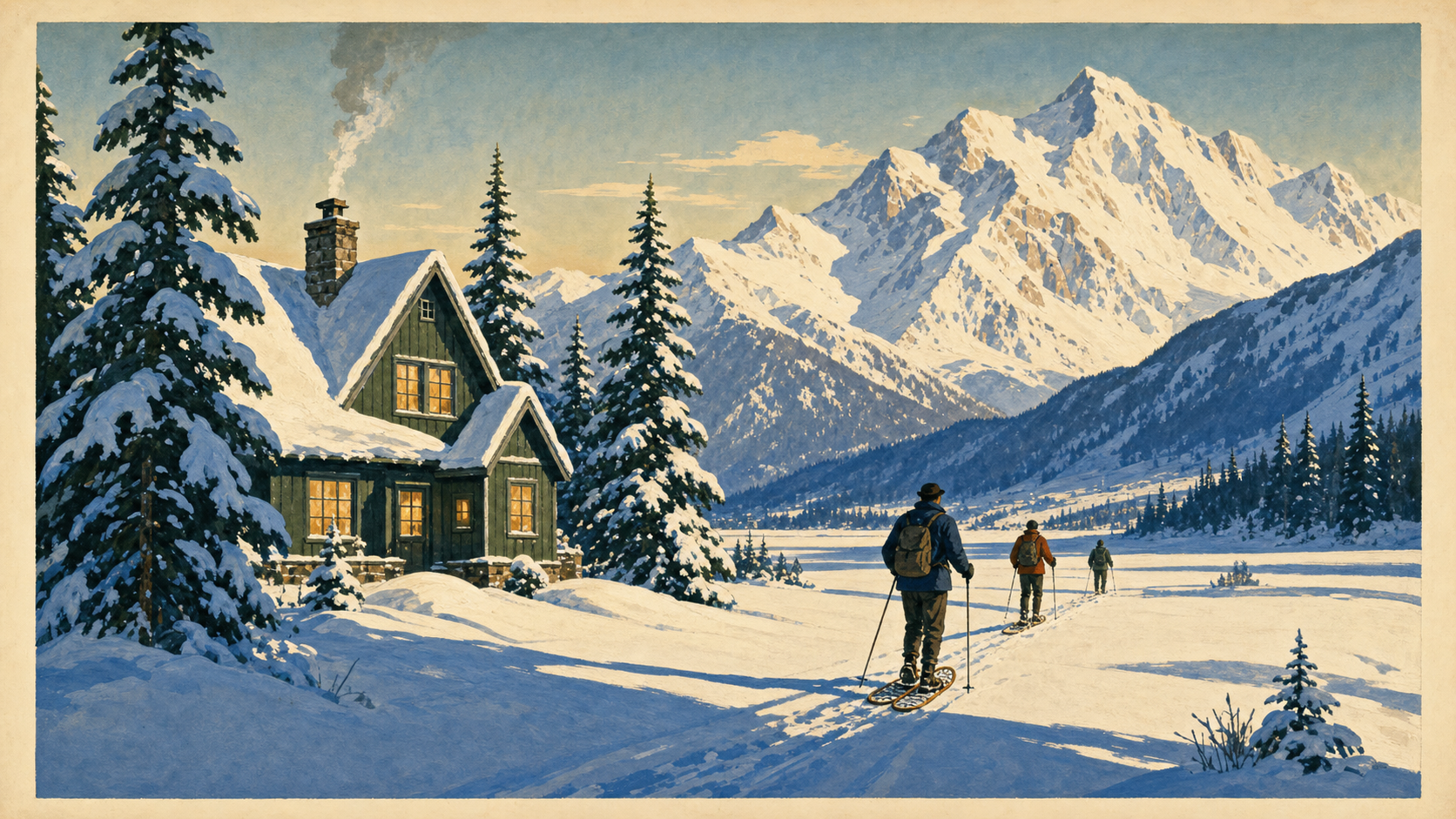
Winter in St. Maries, Idaho: Snowmobiling, Nearby Skiing, and a Quiet Base
What to do in St. Maries, Idaho in winter — snowmobiling and registration rules, day trips to Silver Mountain, winter driving, and a flexible weekend plan.
Winter in St. Maries is quiet. Most visitors come for one of two things: snowmobiling, on a trail system Idaho actively grooms in the St. Maries and Clarkia areas, or a day trip to Silver Mountain at Kellogg for downhill skiing. Beyond that, it's scenic driving, snowshoeing on flat trails, and a small town going about its winter business.
What winter here isn't: a ski town. There's no lift within an hour, no après scene, and no guarantee of snow in any given week. If that sounds appealing rather than disappointing, read on.
At a glance
| Activity | Where | Best for | Check conditions with |
|---|---|---|---|
| Snowmobiling | Local IDPR-groomed areas; Silver Valley system | Riders with their own sled and Idaho registration | IDPR; Benewah County |
| Downhill skiing | Silver Mountain Resort, Kellogg | A full-day drive-and-ski outing | The resort; Idaho 511 |
| Snowshoeing / XC skiing | Flat sections of the Trail of the Coeur d'Alenes | Low-key winter exercise | Idaho Parks and Recreation |
| Scenic winter driving | St. Joe River Road; Highway 3 | Photography, slow days | Idaho 511; St. Joe Ranger District |
| Indoor and low-key | Old Mission State Park; the house | Bad-weather days | IDPR |
Everything above depends on conditions that change daily. Nothing in this guide is a condition report or a forecast.
Snowmobiling
This is the main reason people book St. Maries in winter.
Idaho Parks and Recreation operates a snowmobile grooming program covering the St. Maries and Clarkia areas — one of roughly twenty-nine grooming programs across the state. To the northeast, the much larger Silver Valley system is state designated area #40, running roughly 2,700 to 5,000 feet, with a prime season generally December through March and full services in Wallace, Kellogg, and Avery. Idaho's network is interconnected on a scale that surprises first-timers; the Coeur d'Alene system links to the Wallace system and on toward Haugan and St. Regis in Montana.
We're not publishing specific trail names, mileages, or staging areas here, and you should be sceptical of any vacation-rental blog that does. Grooming status and access change constantly, and the people who know are the agencies and the local club.
Registration — sort this out before you travel
Idaho's requirements are strict and catch visitors out:
- Every snowmobile operated on public or private land in Idaho must be registered with Idaho Parks and Recreation on or before November 1 each year.
- Non-residents must buy a nonresident snowmobile user certificate. It was $59.50 for a one-year period at last check, and there is no short-term option — you cannot buy a weekend permit.
- Registration stickers must be displayed on both sides of the cowling, visible and legible.
- Groomer stickers may be required on particular trail systems and are sold at area businesses.
- A valid driver's licence is required to operate on groomed trails.
Registration fees fund the groomers, trail signing, plowed parking areas, and warming shelters. Confirm all current requirements and fees with IDPR before you load a trailer.
Safety
Snowmobiling in the Panhandle means avalanche terrain in places, variable snow, and stretches with no cell service.
- Check the Idaho Panhandle Avalanche Center before riding anywhere near avalanche terrain.
- Carry avalanche gear and know how to use it if you're leaving groomed trails. Owning a beacon isn't the same as being trained.
- Ride with others. Tell someone your plan and your expected return.
- Carry survival gear — extra layers, food, water, a way to make heat, and a means of communication that doesn't rely on cell coverage.
- Daylight is short. Turn around earlier than feels necessary.
Skiing and snowboarding
There's no ski area in St. Maries. Silver Mountain Resort at Kellogg is the nearest full-size mountain, and it makes a straightforward full-day trip.
Published figures put Silver Mountain at 1,600 skiable acres across 67 trails, with about 2,197 feet of vertical and a top elevation of 6,297 feet at Kellogg Peak. Roughly 20% of terrain is rated beginner, 40% intermediate, 30% advanced, and 10% expert. The longest run, Centennial Trail, is about 2.5 miles. There's night skiing on a portion of the mountain.
The distinctive thing about Silver Mountain is the gondola from the valley floor — you park in the village near the interstate at around 2,300 feet and ride up, rather than driving a mountain road. In winter that's a genuine advantage.
Published average annual snowfall is around 300 inches. An average is not a promise for the week you're visiting. Check the resort's own snow report and lift status before you commit to the drive.
Plan on roughly an hour and a quarter each way in good conditions, and meaningfully longer in poor ones. Leave early, check Idaho 511 before setting out, and be honest with yourself about driving home tired in the dark on winter roads.
Snowshoeing, cross-country, and low-key days
The Trail of the Coeur d'Alenes is open year-round and sees snowshoeing and cross-country skiing in winter. The flat sections around Heyburn State Park and along the lake are the obvious choice — paved and level underneath, scenic, and low-commitment. Note that we're not aware of winter grooming or track-setting, so expect to break your own trail after fresh snow.
Heyburn State Park stays open year-round, though which facilities and roads are available varies. Check with IDPR.
Scenic driving is underrated here. The St. Joe River Road east of town is beautiful in winter — dark water, snow-loaded evergreens, mist. Highway 3 north along the lake is likewise good. Stay on maintained highways, don't attempt unplowed forest roads, and turn around when conditions deteriorate.
Indoor options are thin. Old Mission State Park at Cataldo has a visitor centre and exhibition and has listed winter hours of 10 a.m. to 3 p.m. — check IDPR for current times. The Hughes House Museum in St. Maries is volunteer-run and may not be open in winter at all; call before you count on it.
Winter driving and what to pack
This section matters more than the activity sections.
Driving:
- Check Idaho 511 before every drive. Conditions change within hours.
- Carry chains and know how to fit them. Practise in your driveway, not in a snowstorm on Highway 3.
- Winter or all-season tyres with real tread. Summer tyres are genuinely dangerous here.
- Keep the tank above half. Distances between services are long.
- Slow down. Most winter incidents on these roads are single-vehicle and speed-related.
- Don't drive unplowed forest roads. Getting stuck somewhere without cell service is the actual risk.
Pack:
- Layers — base, insulating, waterproof shell.
- Waterproof boots with grip, and traction devices for icy walks.
- Hat, gloves, and spares of both. Wet gloves are miserable and dangerous.
- Sunglasses or goggles. Snow glare is intense.
- A vehicle kit: blanket, extra food and water, torch, shovel, jump leads, phone charger.
- Downloaded offline maps.
A flexible winter weekend
The key word is flexible. Build a plan that survives a bad forecast.
Friday. Arrive before dark if you can — winter roads plus unfamiliar routes is a bad combination. Groceries on the way in. Kitchens close early and winter hours contract further, so having food at the house isn't optional. Quiet evening.
Saturday — the main day. Pick based on what conditions actually give you:
- Snow and you brought a sled: ride, with registration sorted and avalanche information checked.
- Snow and you want lifts: leave early for Silver Mountain, check the resort report and Idaho 511 first.
- Marginal snow: snowshoe a flat section of the Trail of the Coeur d'Alenes, then a scenic drive.
- Bad weather: Old Mission State Park, a long lunch, and an afternoon indoors.
Evening: cook. It'll be dark by five and most things will be closed.
Sunday. Something short and local — a drive up the river, a walk in town — then head home in daylight.
Food and supplies in winter
Assume less is open than in summer. Restaurant hours contract in a seasonal town, and several St. Maries places already close on weekends or early in the week during high season. Call ahead for anything you're relying on.
Groceries are the reliable option. Harvest Foods on Homer Drive keeps long daily hours; Archie's IGA on East College Avenue is listed as open around the clock, though it's worth a phone check. Stock up on arrival.
Full detail — with the caveat that those listings were checked in summer — is in the where to eat in St. Maries guide.
Know before you go
Winter conditions in North Idaho change rapidly and without much warning. Road access, snow depth, avalanche danger, grooming status, and resort operations can all be different by the time you arrive.
Check before every outing:
- Idaho 511 — highway conditions and closures.
- Idaho Panhandle Avalanche Center — avalanche forecast and advisories.
- Idaho Parks and Recreation — snowmobile registration, grooming programs, state park status.
- Silver Mountain Resort — snow report, lift and terrain status.
- St. Joe Ranger District, 222 S. 7th St. Suite 1, St. Maries, (208) 245-2531 — forest roads and conditions.
- Benewah County — local snowmobile program information.
Nothing in this guide substitutes for a current check with those sources.
Frequently asked questions
Is there snow in St. Maries in winter? Usually, but it varies year to year and week to week, and nobody can promise it. St. Maries sits at relatively low elevation in the valley, so it often has less snow than the higher country nearby where the snowmobile trails and ski terrain are. If snow is essential to your trip, check current conditions close to your travel dates and stay flexible.
Can I go snowmobiling from St. Maries? Yes — Idaho Parks and Recreation runs a grooming program covering the St. Maries and Clarkia areas, and the larger Silver Valley system is within driving distance. The catch is registration: every snowmobile in Idaho must be registered with IDPR by November 1, and non-residents need a user certificate that cost $59.50 for a full year at last check, with no short-term option. Sort this before you travel, and check current trail and grooming status with IDPR and the county.
How far is the nearest ski resort to St. Maries? Silver Mountain Resort at Kellogg is the closest full-size ski area — plan on roughly an hour and a quarter each way in good conditions, and longer in winter weather. It's reached by gondola from the valley floor rather than a mountain road, which helps. Check the resort's snow report and Idaho 511 before you go.
Is St. Maries a good winter destination? It's a good base for people who want quiet and are self-sufficient — snowmobilers with their own equipment, or travellers happy to drive to skiing and spend evenings in. It's not a good fit for anyone wanting a resort atmosphere, walkable winter activities, or reliable evening options. Services are limited and hours are shorter than in summer.
What should I pack for a winter trip to St. Maries? Layers including a waterproof shell, waterproof boots with grip, spare gloves and hat, and sunglasses for snow glare. For the car: chains you know how to fit, proper winter tyres, a blanket, extra food and water, a torch, and a shovel. Download offline maps — cell service is unreliable outside town.
What is there to do in St. Maries in winter besides snow sports? Scenic driving up the St. Joe River Road or north along Highway 3, snowshoeing on flat sections of the Trail of the Coeur d'Alenes, and a day trip to Old Mission State Park at Cataldo, which has an indoor visitor centre. Indoor options in town are limited — the Hughes House Museum is volunteer-run and may not be open in winter, so call first. See our seasonal guide for how winter compares to other times of year.
735 Elm Drive gives you a warm house to come back to after a cold day — a kitchen for the evenings when everything's closed, and space to dry out gear. It's a base, not a slopeside lodge, which for a St. Maries winter is the right shape.